Some years ago—1984, to be precise—I gave my life to the Lord and became a Christian. It was a pivotal turning point for me, and in the years that followed, I became increasingly active in the church. That path eventually led to lay preaching in the mid-1990s. I was even preparing to begin study toward a Doctorate in Theology when, as so often happens, life and family shifted my direction.
In 2004, my wife and I separated and later divorced. It was not the end of my faith—not even close. My belief has never wavered. But it was the end of my time in the pulpit. I didn’t step away because of a crisis in theology, but out of conviction. We had made vows before God, and when those vows were broken, I no longer felt it was right to counsel others from a place I could not, at that time, honestly uphold. I believed—and still believe—that to preach is a serious responsibility, and for me, it demanded integrity between what was spoken and how life was lived.
That decision didn’t silence my faith. If anything, it refined it. I still speak openly and gladly about what I believe. But I also became more aware of the things we often assume within Christian tradition—and how many of those assumptions go unexamined. One of them came to mind recently, sparked by a single word in a poem: masturbation. An awkward word in most church circles, but it led me down a line of questioning I’d explored years ago in a sermon on love, sex, and marriage—one I never expected to revisit.
The question is simple:
Why do we assume Jesus was asexual?
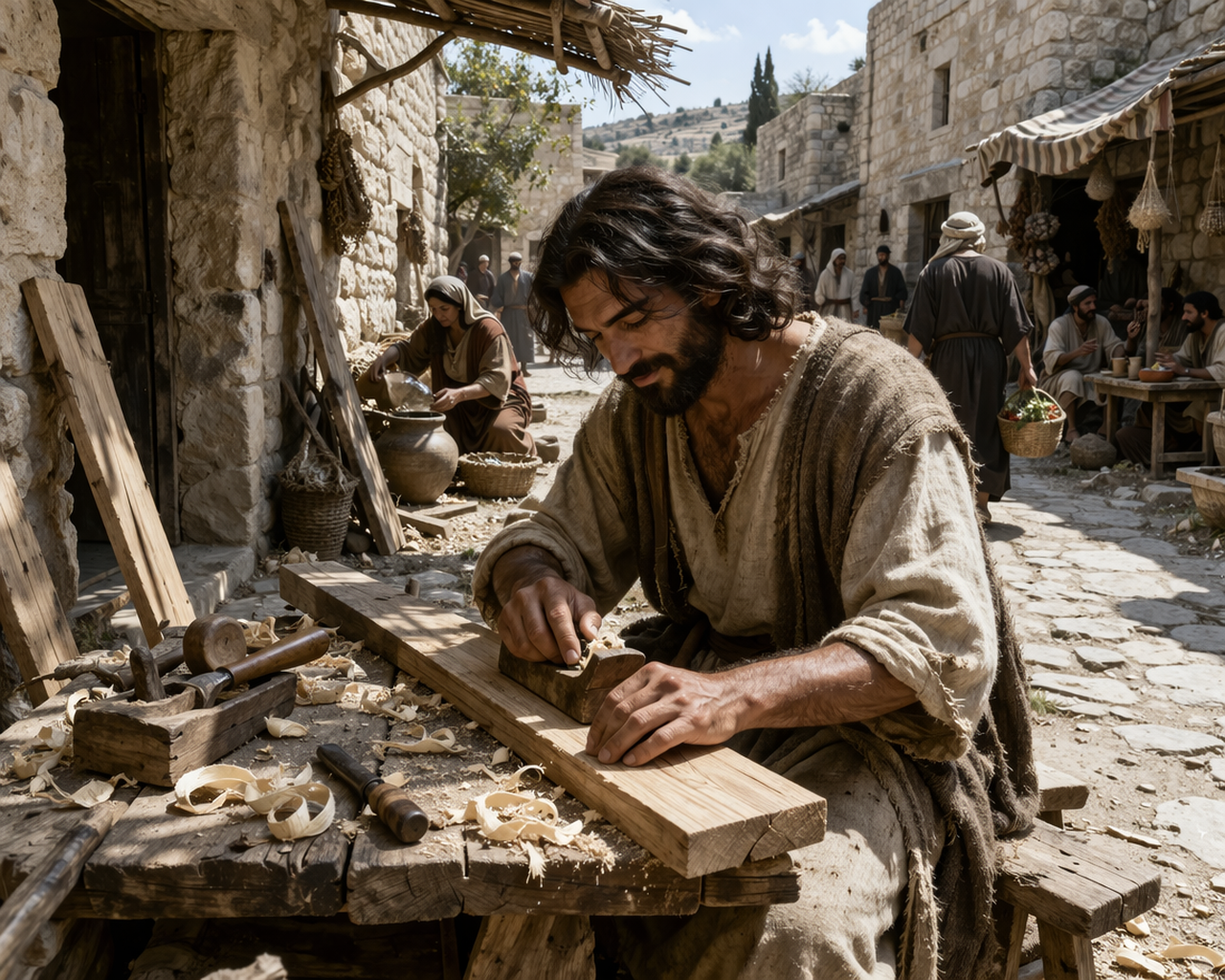
The Gospels give no account of Jesus marrying, having children, or engaging in sexual intimacy. That much is true. But they also give no account of Jesus’s life between the ages of 12 and 30—nearly two decades. One brief story in Luke 2 shows the boy Jesus debating in the temple. The next thing we hear, he’s being baptised by John and beginning his public ministry. What happened in those missing years is left entirely to speculation.
What we do know is that Jesus was, in every theological sense, fully human. “The Word became flesh,” says John 1:14. “He was tempted in every way, just as we are, yet without sin,” says Hebrews 4:15. He wept. He grew tired. He got angry. He formed close friendships. He experienced sorrow and loss and pressure. There’s nothing in Scripture that suggests Jesus was exempt from the ordinary physical and emotional realities of human life—including puberty, attraction, or desire.
And yet, the prevailing image of Jesus across most Christian traditions is one of complete sexual detachment. Celibate, untouched, above all that. A man who, though fully human, never once felt or responded to the pull of human intimacy. Why?
The answer, I believe, lies less in Scripture and more in history.
Early Christian thought developed in a cultural environment shaped heavily by Greek dualism—the idea that the soul is pure and eternal, while the body is base, weak, and corruptible. Plato’s shadow lingers long in Christian theology. Add to that the rise of asceticism, particularly in the early centuries of the church, and you get a Christianity that increasingly equated holiness with celibacy and bodily desire with sin.
Writers like Origen, Jerome, and Augustine—towering figures in early church history—promoted ideals of virginity and sexual renunciation. In time, celibacy became not just a spiritual discipline but a mark of superior piety. Christ, naturally, was assumed to embody this ideal to its fullest extent. To suggest otherwise was, for many centuries, unthinkable. That tradition has held sway for so long that to even question it can feel irreverent.
But here’s the thing: Scripture never says Jesus was celibate. It never says he wasn’t, either. The assumption of Jesus’s lifelong abstinence is just that—an assumption. One shaped by culture, not chapter and verse.
And if we accept that sex within marriage is not sinful—as Hebrews 13:4 affirms—then even if Jesus had married, loved, and been physically intimate, it would not have compromised his sinlessness in the slightest. The idea that such a thing would be scandalous says more about us than about him.
Some may argue, “But surely, we would have been told if Jesus had married.” Perhaps. But it’s also possible that the Gospel writers, focused intently on his divine mission, simply did not consider his private life relevant to their purpose. Remember, these are not biographies in the modern sense. They are theological proclamations—written to affirm belief, not to chronicle daily existence.
There are, of course, no credible biblical references to a romantic relationship between Jesus and anyone else—Mary Magdalene included. The so-called Gnostic Gospels and fringe speculations (popularised in fiction like The Da Vinci Code) stretch well beyond historical or theological evidence. But the question remains: why are we so eager to erase the possibility of Jesus knowing love, companionship, or even longing?
I’m not writing this to argue that Jesus did marry or had sexual feelings. I’m writing this to ask why we feel we must insist that he didn’t.
Because in doing so, we risk something subtle but dangerous: we risk making Jesus less human. We risk creating a Messiah so untouched by the struggles of ordinary people that he becomes less relatable, less approachable, and in the end, less incarnate.
The Incarnation was not a metaphor. It was flesh and blood and hormones and hunger and heartbreak. If we affirm that Jesus was tempted in every way and yet remained without sin, then we must allow for the possibility that he experienced desire, not because he gave in to it, but because to be human is to feel it. To love, to ache, to want, to resist.
That is not weakness. That is strength.
I don’t expect everyone reading this to agree. For some, the idea of Jesus as a sexually mature man will feel uncomfortable, even offensive. But perhaps that discomfort is worth sitting with. Because if we’re honest, much of our theology around sex is shaped not by Christ’s teaching, but by centuries of shame, suppression, and silence.
And if the church is ever to speak meaningfully into the realities of human intimacy—love, sex, marriage, longing, failure—it must be willing to ask the uncomfortable questions. Not to be provocative. But to be honest. To be real. To be faithful.
Because truth doesn’t tremble in the face of questions.
It stands quietly and waits to be seen.


3/26/2026
The Words That Got to Me
I didn’t step away because of a crisis in theology, but out of conviction. We had made vows before God, and when those vows were broken, I no longer felt it was right to counsel others from a place I could not, at that time, honestly uphold. **This tells us volumes about you and sets the stage for this very intelligent conversation/query about Jesus. why are we so eager to erase the possibility of Jesus knowing love, companionship, or even longing? **For me, the short answer here is: Because if Jesus isn't celibate, then why would priests have to be? And I'd bet that that's why even discussing it falls under the heading of "somewhat blasphemous" in a lot of circles. (Not mine; I find it a totally legitimate question} .Because truth doesn’t tremble in the face of questions. It stands quietly and waits to be seen. **The perfect ending, this. REALLY well done.
Jesus was a Jew. That he wasn't married is unthinkable. And of course he didn't talk about it. My proof comes in the form of a sort-of joke: Little Manny comes home from Hebrew School and tells his mother he's gotten a part in the school play. "Wonderful!" his mother exclaims. "What it is?" "I'm going to be playing the part of a Jewish man." His mother scowls and says, "You go right back to that school this minute and tell them you want a speaking part!" Don't give this another moment's thought, Tim; you're spot on with your imaginings. xoxox