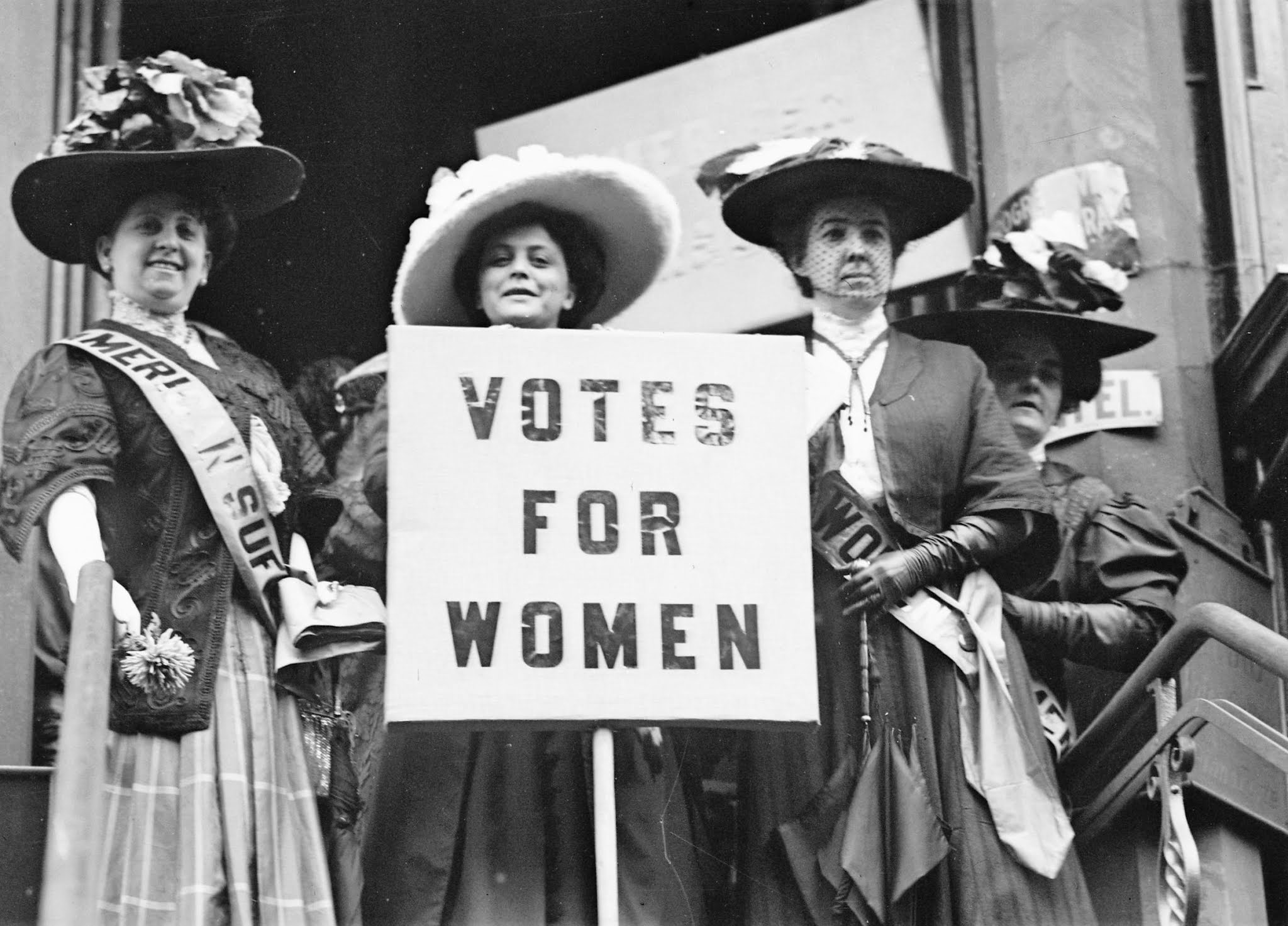
“My grandmother was a powerful woman,” my mother whispered. Mother was furtive, eyes darting repeatedly towards the door. She lay with her head on an ancient, yellowing pillow, her body too exhausted to move. Yet, she was still fully aware of the dangers surrounding us.
“Tell me more, Mum,” I begged, desperate to elongate what time we had left. I leant forward, holding her frail hands in my strong grip. She had never mentioned her grandmother before. “What was her name?”
“Letitia. Isn’t that beautiful?” Mother closed her eyes, smiling. “She smoked a pipe, marched for peace, and wrote love poetry. Imagine that, Sarah!”
I frowned. She didn’t sound like a woman I should imagine at all.
Mother continued, oblivious to my stiffened shoulders. “She was a fighter – what were they called? The votes for women lot.”
My stomach lurched and my throat clenched with fright. I checked there was no-one lurking, overhearing this blasphemy, and shut the door. You never knew when a family member might become an informer.
“Mum, was Letitia a suffragette?”
“That’s it.” Mother smiled, as if I had been particularly clever. “A suffragette. She told me all about what they did to women like her.”
That word was on the banned list now, after forming part of our mind retraining education in the latter years of the previous century, when society was being restructured. As young girls and teenagers, we regarded photos of those women with ridicule and horror as we were educated about their shocking desire to disrupt our society.
The suffragettes were a nationally detested group. If this were discovered, it would put our family on the criminal interest list, not a place to be if you valued your freedom or life.
Letitia, my great-grandmother; a criminal, I thought, thrill and fear coursing through my blood. Such outspoken views were illegal now and the mention of such a woman could ignite gossipmongers, passing spiteful rumours as easily as they passed the salt. Ensuring official eyes avoided your own family’s history made people vicious in their determination to point to crimes elsewhere. No wonder my mother had kept silent after Letitia was erased.
The Erased was a list of unsuitable people, mostly women, who had threatened Britain’s reputation or ideals. Once they were erased, it was illegal to mention them. Boudicca and Anne Boleyn were struck out as harlots while Queen Victoria was condemned for refusing wise male counsel. We were taught to detest women such as Marie Curie and her radioactive experiments when men were fully capable of conducting those studies. Schooled to feel disgust, we supported the removal of women from screens and stages. Books by female authors were banned and burnt, unless a committee of right-minded men decided that these books upheld ‘proper’ womanly ideals. There were very few books left by women now, only cookery or homemaker manuals, with illustrations instructing a generation of illiterate women. Female doctors, lawyers, and vicars were also removed, imprisoned in most cases, as tales spread of their second-rate practices. Female politicians conducted tirades against change but were quickly discovered to be corrupt by the male-dominated press. Punishments and disappearance were common for females who complained or disobeyed the new regime.
My generation was the last to study the Erased list and the last to be schooled at all before being ejected from educational establishments. My own daughter was born into a new era where the rules were already established. She, like all her female peers, never received schooling and never learnt to read. I was instructed that this would spare her pain. Male leaders promised that girls could now lead wholesome, innocent lives. I raised my daughter in the correct way, under my husband’s guidance, to be modest and quietly compliant.
Yet sometimes, I watched her empty, melancholy face, and wondered if I was doing the right thing.
My mother’s breathing became more laboured, and I knew that death was approaching, fast. “Where did our world go?” she whispered.
The door banged open, stopping my reply. My father and husband rushed in; suspicion etched on frowning faces. They distrusted female gatherings or conversations behind closed doors, signalling a fragile notch in their patriarchal certainty.
“Remember Letitia,” my mother mouthed before closing her eyes for the last time.
I kissed her, silently vowing to remember my great-grandmother alongside my beautiful mother. Feeling the spirit of my female ancestors stir within my soul, I disengaged my mind from the heavy male presence in the silent room.
7/31/2026
The Words That Got to Me
"My grandmother was a powerful woman." Simple and powerful; that gets even more so as we learn more about the woman. "I checked there was no-one lurking, overhearing this blasphemy..." Simple, economical storytelling that tells us so much about the society she is living within. "The Erased was a list of unsuitable people..." The dystopian connotations of this are chilling and immediately brought to mind societies in our own history. The Stalin era in Russia, the 'disappeared' of Argentina and Mao's Cultural Revolution.
Suggestions / Possible Tweaks
If I was to comment anything here it is that this is too short... or maybe too much information for its length? The middle section where you explain the Erased list and rewritten history is fascinating but risks being an info-dump. Maybe expanding the story and weaving some of those elements more naturally into the narrative through recollection or conversation might make it even more effective.
You paint a picture of a frightening world that could so easily be a reflection of humanity's darker chapters. I wanted more; I want to explore more of your world and its effects on society. And that in itself is what I think makes great fiction. A story that does not provide all the answers and leaves the narrative to linger in the mind of the reader. The way you anchor it in the emotional relationship between mother and daughter means it remains personal and relatable even in the depths of its horror. This is both thought-provoking and unsettling in the best of ways. Dystopian indeed.