ACT I
Scene: The Picture Gallery, Hampton Court Palace, England.
Time: January 2026, late afternoon.
Characters:
ANNE BOLEYN: a ghost, last seen alive in 1536 before execution on the orders of her husband King Henry VIII.
LUCILLE CAREY: a 36-year-old female historian.
VISITOR SUPPORT OFFICER: a male, volunteering at Hampton Court.
FADE IN:
INT. HAMPTON COURT PICTURE GALLERY – LATE AFTERNOON.
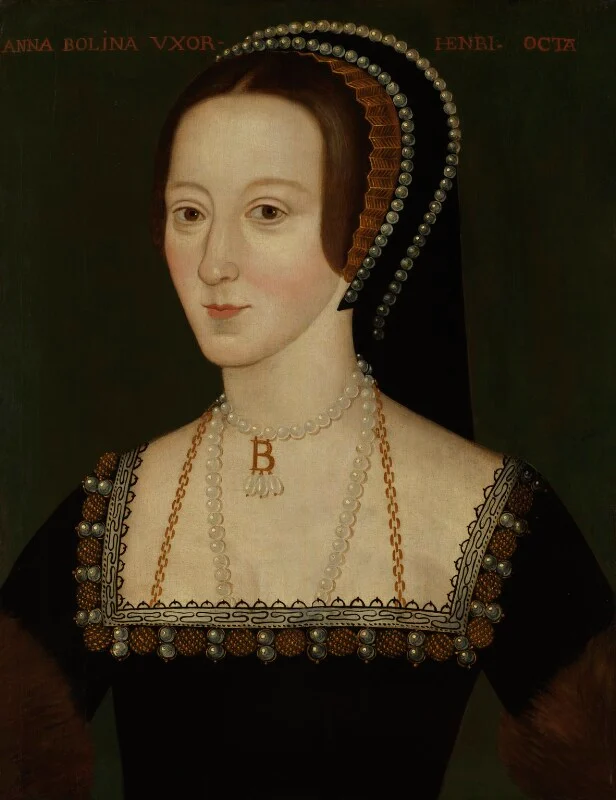
LUCILLE walks along the gallery lined with portraits and comes to a halt in front of one of the portraits.
LUCILLE: There you are, my little beauty!
VISITOR SUPPORT OFFICER enters the gallery and walks towards Lucille).
VISITOR SUPPORT OFFICER: Excuse me Madam, just to let you know that we shut at 4:30 this afternoon.
LUCILLE: Yes, I know. Thank you. I just had to see this portrait though.
VISITOR SUPPORT OFFICER: Ah yes, our very own villain of the piece, Miss Anne Boleyn.
LUCILLE: (bristles) I wouldn’t call her the villain. What about him? (She gestures to a large portrait of King Henry VIII in his later years).
VISITOR SUPPORT OFFICER: King Henry VIII, yes, a larger-than-life character indeed. He does tend to raise strong reactions in our female visitors. (He chuckles). Anyway, I’ll leave you to enjoy the portraits. Remember, we close at…
LUCILLE: Half past four. Yes, thank you. I did hear you before.
VISITOR SUPPORT OFFICER leaves the gallery.
ANNE BOLEYN: (from the portrait) What a stuffed cod that old driveller is.
LUCILLE: (surprised, looking round the empty gallery). Hello? Who’s there?
ANNE BOLEYN: Hello. I’m here. Look up here! Here I am.
LUCILLE: (gapes at the portrait). You…you… can speak!
ANNE BOLEYN: (haughtily) Of course I can speak. I’m Anne Boleyn – nothing ever stopped me speaking. And who are you, pray? One of my ladies-in-waiting? I don’t recognise you.
LUCILLE: No, I’m Lucille Carey, a historian.
ANNE BOLEYN: (yawning) Oh no. I never could abide history lessons. You’re not going to bore me with a lecture on The Crusades or The Black Death, are you?
LUCILLE: Not my era. Don’t worry. No, I’m just fascinated with the Tudor era, and I’ve been so keen to see your portrait.
ANNE BOLEYN: I can understand that. I am rather striking.
LUCILLE: I hope to write a book about you. I’m so excited. I think we might even be related, through your sister Mary’s descendants. My surname is Carey and your sister’s second husband was William Carey.
ANNE BOLEYN: (sniffs) Second husband? Goodness, Mary certainly always bred faster than a rabbit. I’d even heard her and Henry were… you know. Well, I will call you my sweet cousin then and if we’re family, I can ask you a favour.
LUCILLE: Anything!
ANNE BOLEYN: Tell me, Lucille, is my head on nice and straight. It has felt peculiar ever since…
LUCILLE: (nods with understanding) So, you do know about…
ANNE BOLEYN: My delightfully executed execution? Yes, I was there in fact. Were you?
LUCILLE: No. It was well before my time, I’m afraid.
ANNE BOLEYN: Shame. I put on a lovely show you know. Gave a beautiful speech about love and duty and all that tripe. (She smiles). Do you have a mirror on you? I want to check how well they’ve painted my neck. Have they managed to cover the scar properly?
LUCILLE: (searches through her handbag and holds up a small compact mirror). I think so.
ANNE BOLEYN: (looking in the mirror). My neck’s as long as a horse’s! And you can see my baps!
LUCILLE: Your…?
ANNE BOLEYN: My breasts, silly.
LUCILLE: They’ve given you a lovely necklace though. Look, it’s got a B on for Boleyn.
ANNE BOLEYN: Henry gave me that necklace. He always did have a thing about my neck. I suppose that’s why he ordered a swordsman rather than the axeman in the end.
(pause)
Tell me, if you know, did Henry arrive at my execution in the end? I made such a lovely speech, hoping he would arrive. I always imagined his sorry face when he realised what he’d set in motion.
(pause)
Lucille?
LUCILLE: (replacing the mirror in her bag) I believe he was delayed.
ANNE BOLEYN: Delayed? Delayed by what, may I ask? What could be more important than your wife’s execution?
LUCILLE: (shuffling, looking awkward) I think he was preparing for his next marriage. I’m so sorry Anne.
ANNE BOLEYN: (in a rage) Next marriage? He didn’t marry the Seymour Trollope, surely?
LUCILLE: Jane Seymour. Yes, I’m afraid so.
ANNE BOLEYN: Treachery! She was only my lady-in-waiting!
LUCILLE: Just like you were to wife number one, Katherine of Aragon.
ANNE BOLEYN: (narrowing her eyes) Now listen to me, Cousin, just because I had my head chopped off doesn’t mean you can take advantage of my good nature.
LUCILLE: I wouldn’t dream of it, honestly. I’ve defended you in my book and on YouTube.
ANNE BOLEYN: You who?
LUCILLE: It’s hard to explain.
ANNE BOLEYN: Never mind. So, you’re an author, are you? Did you know that I could read and write too? (giggles) Henry and I used to write love letters to each other, back in the era when he didn’t want to chop my head off. (She sighs) He was such a handsome man, and his letters and songs were to die for.
LUCILLE: (stares at King Henry VIII’s portrait opposite) Really? Well, beauty is in the eye of the beholder I suppose.
ANNE BOLEYN: What are you staring at? Who’s that ugly piece of mutton?
LUCILLE: King Henry VIII, your husband.
ANNE BOLEYN: (laughs) No, no. I wasn’t married to that horrendous ox.
LUCILLE: Yes, you were. That’s what he ended up looking like in his later years. Obese and covered in pus-filled sores, troubled with gout and a bad smell.
ANNE BOLEYN: (laughing) Oh, revenge is sweet! I hope Jane Seymour enjoyed her sorry triumph.
LUCILLE: Not for long. She died not long after she had her baby, Prince Edward, in 1537.
ANNE BOLEYN: (sadly) A boy? Henry was so desperate for a boy. I could only produce my little daughter.
(pause)
So, Jane died, that’s nice to hear, and Henry was left on his own for ever.
LUCILLE: Well…not exactly. There were a few more wives after her.
ANNE BOLEYN: More wives? How many wives did he get through exactly?
LUCILLE: Six of you, in the end.
ANNE BOLEYN: SIX? (waves her fist at Henry’s portrait). You greedy rat. What happened to them?
LUCILLE: Well you know about the first two: Katherine of Aragon – divorced, you – obviously beheaded. Then there was Jane Seymour – died, Anne of Cleves, a Germanic lady – divorced for looking like a horse, Catherine Howard – beheaded, and finally Katherine Parr. She outlived him but didn’t live long after that.
ANNE BOLEYN: Wait, Catherine Howard…I know that name. Not my little cousin, Catherine?
LUCILLE: Afraid so. He chopped her head off with an axe, not a sword like you.
ANNE BOLEYN: Oh, well. That makes me feel slightly better. So many wives! What a beast. He always promised me I’d be his last wife on Earth.
LUCILLE: He became known as the Butcher of England.
ANNE BOLEYN: Well, isn’t that a lovely badge of honour? I’m sure he enjoyed that. Oh Lucille, he was such an affectionate man when I met him. He called me his Greensleeves and sang me sweet love songs. Where did it all go wrong?
LUCILLE: It might have been the argument with the Pope, breaking away from the Catholic Church, dissolving the monasteries, and causing widespread unrest, or maybe it was you upsetting the people of England by wearing yellow at his first wife’s funeral.
ANNE BOLEYN: Alright, Miss Clever Breeches. I don’t need a history lecture, thank you (sighs).
LUCILLE: What’s the matter, Anne?
ANNE BOLEYN: That’s Queen Anne to you, Madam.
LUCILLE: Queen Anne, of course. I do beg your pardon.
(ANNE BOLEYN begins to weep softly).
LUCILLE: What’s the matter?
ANNE BOLEYN: Apart from the beheading and the news about all those wives, you mean?
LUCILLE: Yes, apart from all that.
ANNE BOLEYN: I never got to see my sweet Lizzy grow up, my little daughter. Poor little mite, I suppose Henry had her killed, or worse still, bundled into a Nunnery.
LUCILLE: (grinning) Do you see that portrait over there, next to Henry?
ANNE BOLEYN: (swivels her eyes) What, the one of a dog? He had our daughter eaten by a dog?
LUCILLE: No, no. The other portrait.
ANNE BOLEYN: Oh, her. Yes, I’ve seen her before. Strange looking woman with that whitened skin and ginger hair. What’s that strange contraption around her neck?
LUCILLE: It’s a ruff.
ANNE BOLEYN: A rough what? Oh, you do talk nonsense, Lucille.
LUCILLE: That’s Elizabeth I.
ANNE BOLEYN: The first what?
LUCILLE: The first Elizabeth. She was Queen of England from 1558 to 1603. Your daughter, little Lizzy.
ANNE BOLEYN: My little Lizzy? Really? Well, I’m not sure about her fashion sense and it looks like she’s poisoned her skin but… Queen of England, you say? Who was her husband then?
LUCILLE: No husband. She was queen in her own right.
ANNE BOLEYN: No husband? Don’t be silly. Women can’t be queens in their own right.
LUCILLE: They can and she was. She refused to marry anyone. I suppose she’d been brought up seeing that marriage could be a dangerous condition for a woman.
ANNE BOLEYN: Sadly, accurate words, dear Cousin. That’s really my daughter?
LUCILLE: They even named an era after her: Elizabethan.
ANNE BOLEYN: (laughs) Elizabethan? How grand that sounds. So, did grandchildren ever arrive?
LUCILLE: I’m afraid not, but with all your sister’s descendants, the Boleyn genes have continued down the centuries. As I said, we might be very distant cousins. Even our former queen Elizabeth was a distant cousin of yours.
ANNE BOLEYN: You just said Elizabeth was my daughter.
LUCILLE: I’m talking about another queen now, Elizabeth II. She ruled for a long time too, as did Queen Victoria a century before.
ANNE BOLEYN: More queens? Truly? (claps her hands in delight). So, Henry’s obsession with sons was to no avail after all?
LUCILLE: Even Katherine of Aragon’s daughter Mary had her turn on the throne.
ANNE BOLEYN: (puffing up with fury) Mary, my nasty verminous, villainous step-daughter?
LUCILLE: Don’t worry. She didn’t last for long.
(VISITOR SUPPORT OFFICER re-enters the gallery).
VISITOR SUPPORT OFFICER: Excuse me. It is almost half past four now. We’re about to close for the night. I hope you found what you were looking for.
(He turns away).
LUCILLE: Oh yes, I did, thank you. I’m just coming. (She turns to ANNE BOLEYN, who is now smiling). I’ve got to go, but I could come back again, if you like.
ANNE BOLEYN: Please do, my sweet Cousin. I’m rather enjoying these history lessons after all. You have cheered my spirits immeasurably. And, Lucille?
LUCILLE: Yes?
ANNE BOLEYN: Portray me well in your book or I will devise ways to show my displeasure.
(Lights flicker in the gallery)
LUCILLE: (shivering with unease) Yes, Queen Anne. I will: I promise.
LIGHTS FADE.
CURTAIN.