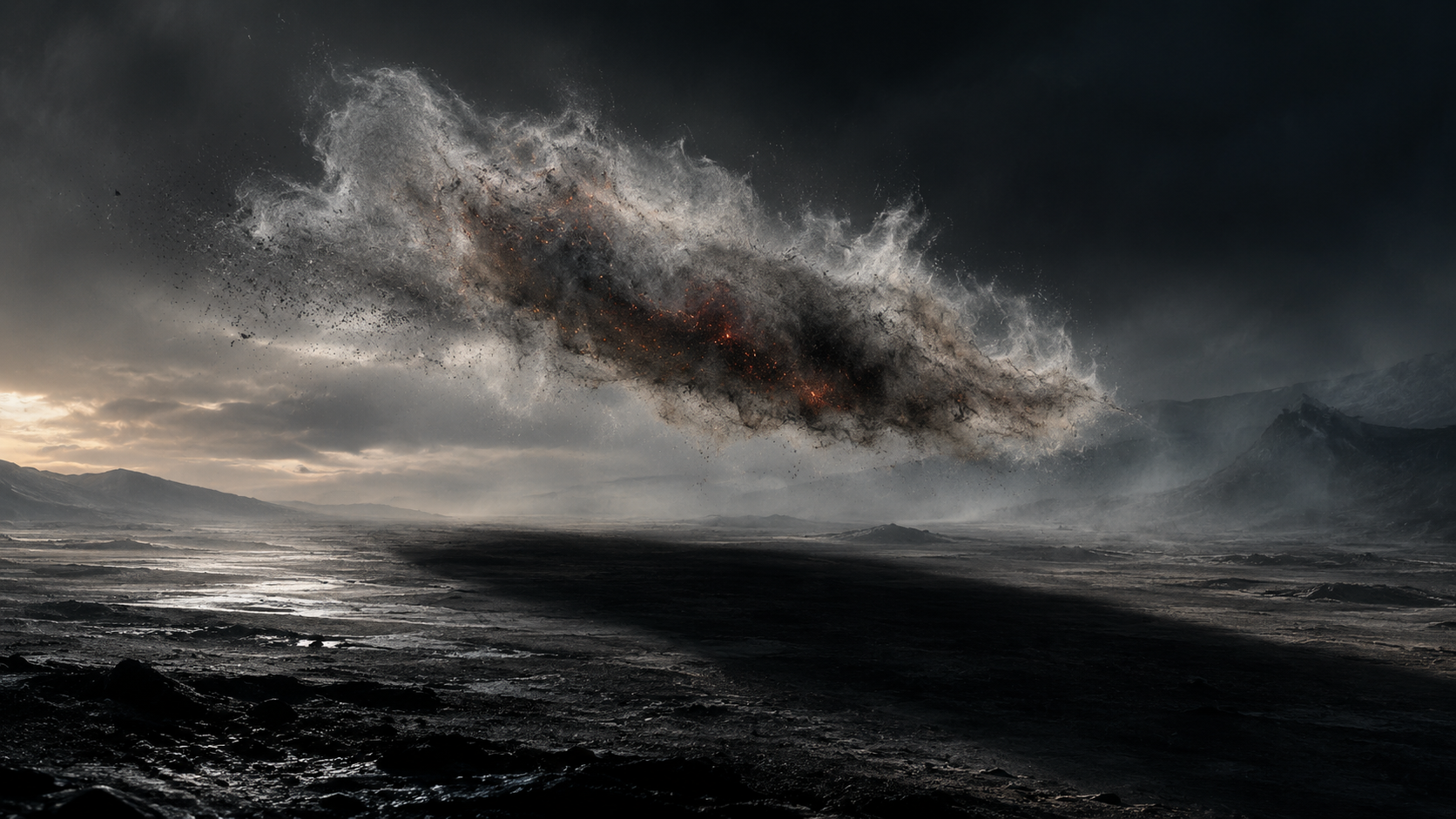
The flame was small, but still it burned so bright,
its embers caught upon the timbered past.
I did not move—I let the fire breathe deep.
A single choice, a moment left to chance,
and now the smoke has settled on my hands.
The night still hums; it does not speak of guilt.
I swore I’d walk a road untouched by guilt,
but here I stand beneath the cinder-bright
reminder that I hold this weight in hands
that did not flinch when fate erased the past.
A shattered oath, a twist of brutal chance—
I hear it whisper where the scars run deep.
But nothing soothes the burn. It sears too deep.
No water quenches—only drowns the guilt.
A face, a voice, a fragment left to chance,
returning in the embers’ shifting bright.
No prayer can fold this agony to past,
no river wash the burden from my hands.
The weight of ash still lingers on my hands.
I scrub until my skin is raw and deep.
But even blood cannot unwrite the past,
nor carve away the rotten shape of guilt.
The mirror blurs with tongues of ember-bright,
mocking me for leaving life to chance.
And yet they say it always falls to chance—
this fickle fate that laughs in mortal hands,
that turns to dust all things that once were bright.
I told myself the wound was never deep.
But silence is the only voice of guilt,
and silence never truly buries past.
Now all I know is how to haunt the past,
how every step is only cruel chance,
how nothing shields the hollow weight of guilt.
The wind is soft—it does not grasp with hands.
Nor feel how fear may bury sorrows deep,
how embered ghosts still smoulder in the bright.
I see the past still clinging to my hands,
a shadow bright, yet buried far too deep.
No chance remains—only the weight of guilt.
The Sestina originated in 12th-century France, created by the troubadour Arnaut Daniel, a poet from the Occitan region (now southern France). It became a favourite among medieval poets for its intricate and rigid structure, which allowed for emotional depth and musicality.
Structure: 39 lines, consisting of six sestets (6-line stanzas) and a final tercet (3-line stanza).
Word Repetition: Instead of rhyming, the last words of each line in the first stanza are reused in a set pattern throughout the poem.
Pattern: The ending words of each line in the first stanza are rotated through each subsequent stanza in a specific order:
1st stanza: ABCDEF
2nd stanza: FAEBDC
3rd stanza: CFDABE
4th stanza: ECBFAD
5th stanza: DEACFB
6th stanza: BDFECA
Final tercet: All six words must appear, two per line.
I chose this form as it creates a relentless cycle, mirroring the way guilt circles in the mind, never truly leaving.
8/18/2026
The Words That Got to Me
No prayer can fold this agony to past, *I absolutely love this choice of words. So poetic and throat-punch painful all at once. But silence is the only voice of guilt, *well, unless you're Jewish, in which case it's the haranguing, relentless voice of one's mother that never-but-never leaves the aural canal... and silence never truly buries past. *another one of those pointed realizations that cuts right to the bone.
YIKES! First of all, what a really intricate and difficult style of poetry this is!! OY! I'm going to try it myself. (You'll know this because I'll be bald in all future photos from tearing out my beautiful red hair in frustration.) Second, this poem is tremendous. It's so dark and intense and guilt-riddled and disturbing. This is a stand-out for me from all your other offerings on here. Very rich-textured, too, and alluring. I don't want to be drawn into it, but I can't seem to free myself from the painfully hypnotic tentacles. It's the literary equivalent of the Adagio movement of the Moonlight Sonata. Superior work here, Tim. And thank you for inspiring me to try it, too! Stay tuned. xoxo